Shenzhen Mufeng Technology Limited Company
QR Code Inkjet Printer: Barcodes on Production Lines
Upload Time:
Nov 04, 2026
A QR code inkjet printer marks 1D barcodes and 2D codes on packaging without contact. Compare TIJ, CIJ and laser for production-line barcode inkjet coding and choose in 6 steps.
By Shenzhen Mufeng Technology Limited Company | Published
A QR code inkjet printer prints 1D barcodes and 2D codes such as QR or Data Matrix directly on packaging as products move on the line. Choose thermal inkjet (TIJ) for sharp high-resolution codes at short print distance, continuous inkjet (CIJ) for fast small codes on curved or uneven surfaces, or laser marking when you need a permanent mark without ink.
This guide from Shenzhen Mufeng Technology Limited Company explains what barcode inkjet coding needs on a production line, when each technology fits, and a 6-step method to choose an industrial barcode printer without inventing specifications you have not verified on your own products.

What is a QR code inkjet printer?
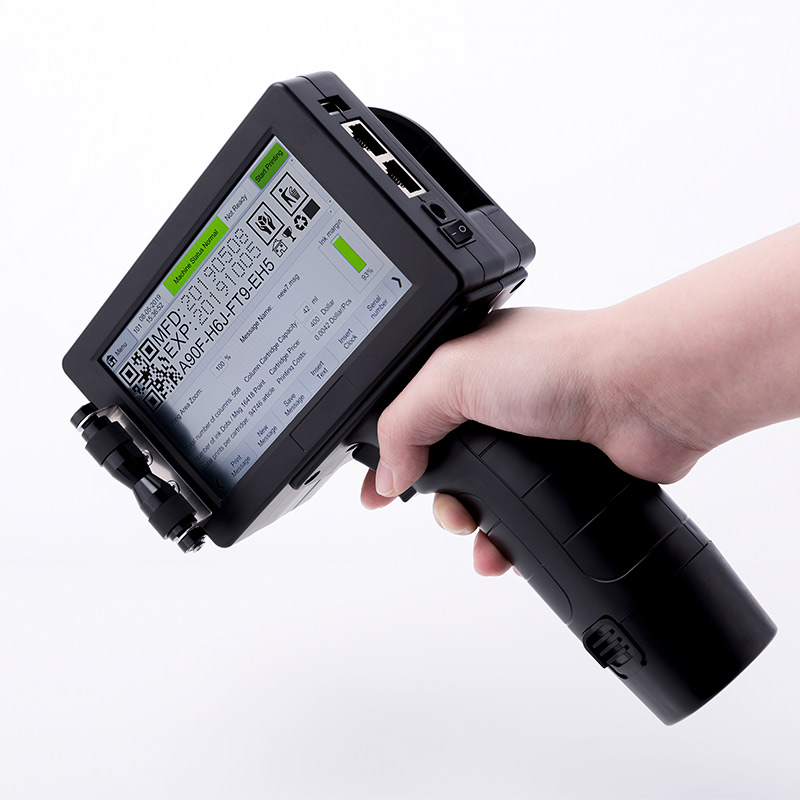
A QR code inkjet printer is an industrial coder that can print two-dimensional codes (QR, Data Matrix and similar) and usually also 1D barcodes, dates and batch text. On packaging lines the printer is either fixed beside a conveyor (online) or used as a handheld unit for stationary products.
Unlike a desktop office printer, an industrial unit must trigger from a sensor, keep code size stable at line speed, and use an ink or mark that stays readable on the real packaging material.
What barcode inkjet coding needs on the line
Barcode inkjet coding succeeds when four things match: the code type and size, the surface, the print distance, and the line speed. A code that scans in the design software can still fail if the ink smears on film, if the head is too far from the pack, or if resolution is too low for a dense QR symbol.
Write down whether you need a 1D barcode, a QR code, a Data Matrix code, or a mix with date and batch text. Then measure the printable area and note whether the surface is porous (carton, paper) or non-porous (plastic, metal, glass, coated film).
TIJ vs CIJ vs laser for 2D code on packaging
| Factor | TIJ (thermal inkjet) | CIJ (continuous inkjet) | Laser marking |
|---|---|---|---|
| How it marks | Cartridge nozzles fire drops; head close to the surface | Continuous ink stream; charged drops hit the product | Laser beam changes or etches the surface; no ink |
| Typical code size | High-resolution codes within the cartridge print height (for example 12.7mm or 25.4mm per head) | Small characters and codes, listed 2 to 20mm high on MFS200 Plus | Size set by the marking field and content |
| Print distance | Short gap; many online TIJ heads specify about 1 to 2mm or 2 to 5mm | Best printing distance listed at 12mm on MFS200 Plus | Depends on lens and fixture; product must stay in focus |
| Best surfaces | Cartons and paper with water-based ink; plastics and metal with solvent cartridges | Bottles, cans, cables, pipes, pouches and many primary packs | Materials that accept a permanent laser mark (metal, some plastics, coated packs — confirm by test) |
| Consumables | Replaceable TIJ cartridges (ink and nozzles together) | Ink plus matched make-up solvent | No ink; periodic laser and fume extraction care |
| MufengTech examples | MFT180E, MFT110M, handheld MF-G100 | MFS200 Plus | Fiber laser, CO2 laser |
When a TIJ QR code inkjet printer is the right choice
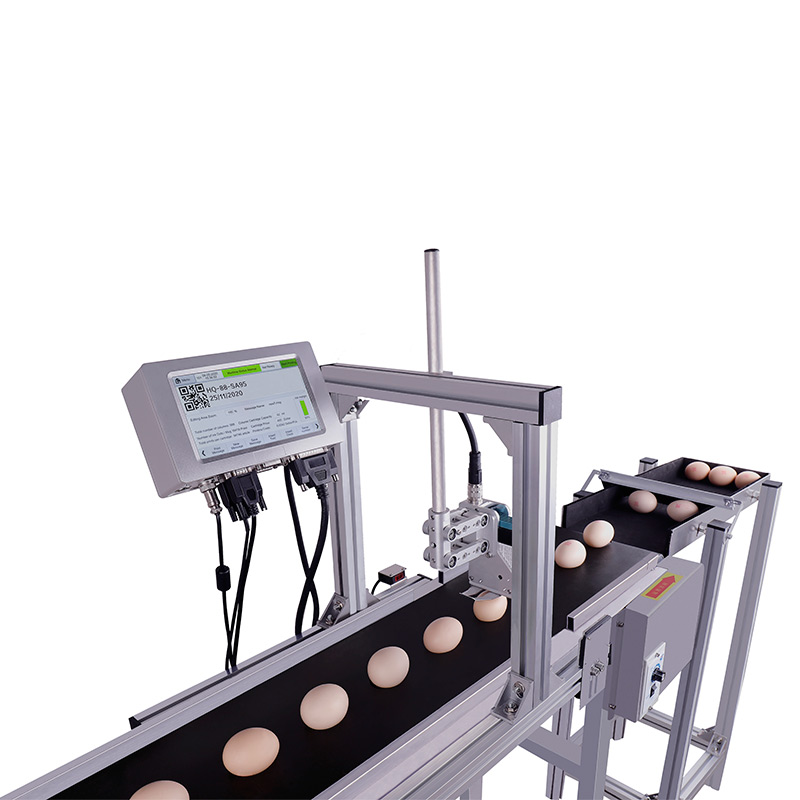
Choose TIJ when you need sharp, high-resolution barcodes or QR codes on relatively flat packs and you can keep a short, steady gap to the surface. Online TIJ printers such as the MFT180E high speed variable date printing system are built for conveyor coding with sensor triggering. Handheld TIJ units suit cartons on pallets or rework stations.
Ink choice still matters: water-based cartridges for absorbent cartons and paper; solvent quick-drying cartridges for non-porous packs. Cartridge volume on MufengTech TIJ models is typically 42ml.
When CIJ suits industrial barcode printer jobs

Choose CIJ when products move quickly, sit farther from the head, or have curved surfaces. The MFS200 Plus series continuous inkjet printer lists barcode types such as CODE39, CODE128 and EAN variants, and 2D types including QR code, Data Matrix and PDF417, with more than 20 independent counters and a maximum printing speed of 384m/min.
CIJ needs ongoing ink and make-up care. Plan matched consumables and basic daily checks so small barcodes stay readable through a full shift.
When laser marking beats ink for 2D code on packaging
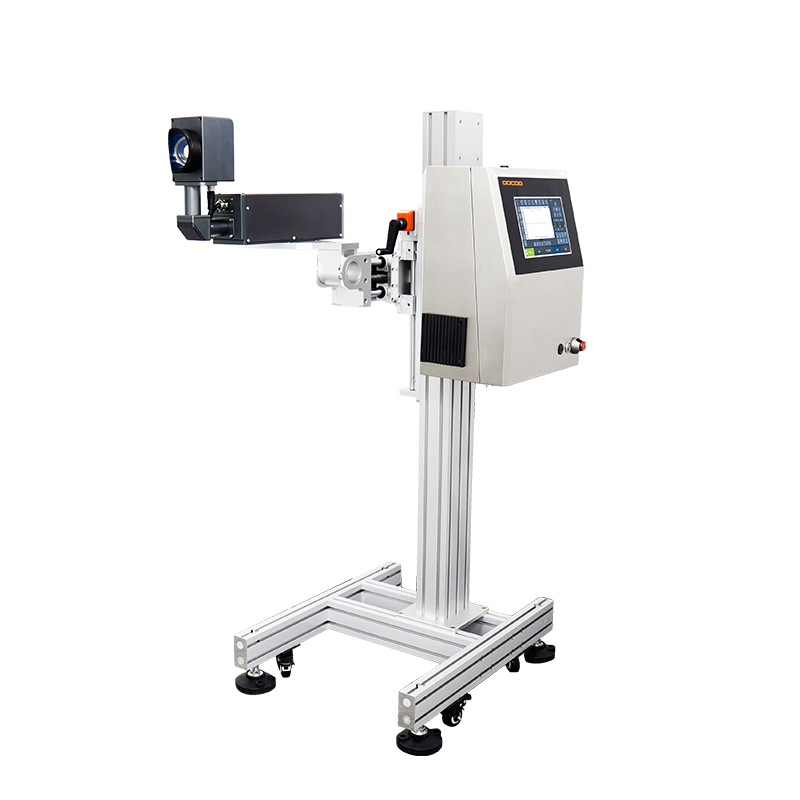
Choose laser when buyers or regulators want a permanent mark that cannot rub off, or when you want to avoid ink on the line. Fiber lasers suit many metals and some engineered plastics; CO2 lasers are often used on organic materials and certain packaging films. Always test the exact substrate — laser settings that work on one plastic grade can fail on another.
How to choose in 6 steps
- Define the code. 1D barcode, QR, Data Matrix, or text plus code; note quiet zones and minimum module size for your scanner.
- Measure the printable area. Check flatness, curvature and the space available on the pack.
- Identify the surface. Porous carton vs coated film, plastic, metal or glass decides ink type or laser process.
- Check line speed and distance. Match conveyor speed and the gap from head to product to each technology’s working range.
- Decide online vs handheld. Continuous conveyors need a fixed head; warehouse or rework jobs may suit a handheld coder.
- Test on real samples. Print or mark your actual packaging and scan the codes before you order in volume.
For dedicated TIJ cartridge and coder details see tijinkjet.com. For CIJ printers and inks see cijinkjet.com.
About Shenzhen Mufeng Technology Limited Company
Shenzhen Mufeng Technology Limited Company was established in Shenzhen in July 2012. We combine research and development, production, sales and after-sales service for inkjet coders, laser marking machines and consumables used by customers around the world.
FAQ: QR code inkjet printers and barcode coding
Can one QR code inkjet printer also print 1D barcodes?
Yes. Most industrial TIJ and CIJ coders that print QR or Data Matrix codes can also print common 1D barcodes, dates and batch text. Confirm the barcode types on your exact model.
Is TIJ or CIJ better for barcode inkjet coding?
TIJ suits sharp high-resolution codes at a short print distance on flatter packs. CIJ suits faster lines, larger gaps and curved primary packaging. Test both on your product when unsure.
Do I need solvent ink for plastic packaging?
For TIJ on non-porous plastic, film, metal or glass, use a solvent quick-drying cartridge. Water-based TIJ ink is meant for absorbent materials such as cartons and paper.
When should I choose laser instead of an industrial barcode printer with ink?
Choose laser when you need a permanent mark without consumable ink and your material accepts laser marking. Confirm readability and contrast with a sample test.
How do I get a recommendation?
Contact Shenzhen Mufeng Technology Limited Company on WhatsApp +86 158 1405 1051 with your code type, packaging material, line speed and sample photos.
Need help choosing? Send your code type, packaging material and line speed on WhatsApp +86 158 1405 1051 and our team will recommend a coding solution.
Relevant News

Contact Us
16th floor Building AB South Securities Building, Luohu District Shenzhen


