Shenzhen Mufeng Technology Limited Company

TIJ vs CIJ Coders: How to Choose the Right Inkjet Printer
Upload Time:
Nov 01, 2026
TIJ vs CIJ coders compared: print quality, speed, print distance, materials and maintenance, plus 6 steps to choose the right industrial inkjet printer.
By Shenzhen Mufeng Technology Limited Company | PublishedNovember 1, 2026
TIJ vs CIJ: choose a thermal inkjet (TIJ) coder when you need sharp, high-resolution codes on cartons, labels and flat packs with simple cartridge changes. Choose a continuous inkjet (CIJ) printer when you code fast-moving bottles, cans, cables or pipes, curved or non-porous surfaces, or products that pass the head at a larger distance.
This guide from Shenzhen Mufeng Technology Limited Company explains how the two technologies work, compares them side by side, and gives a 6-step method to pick the right industrial coding printer for your line.
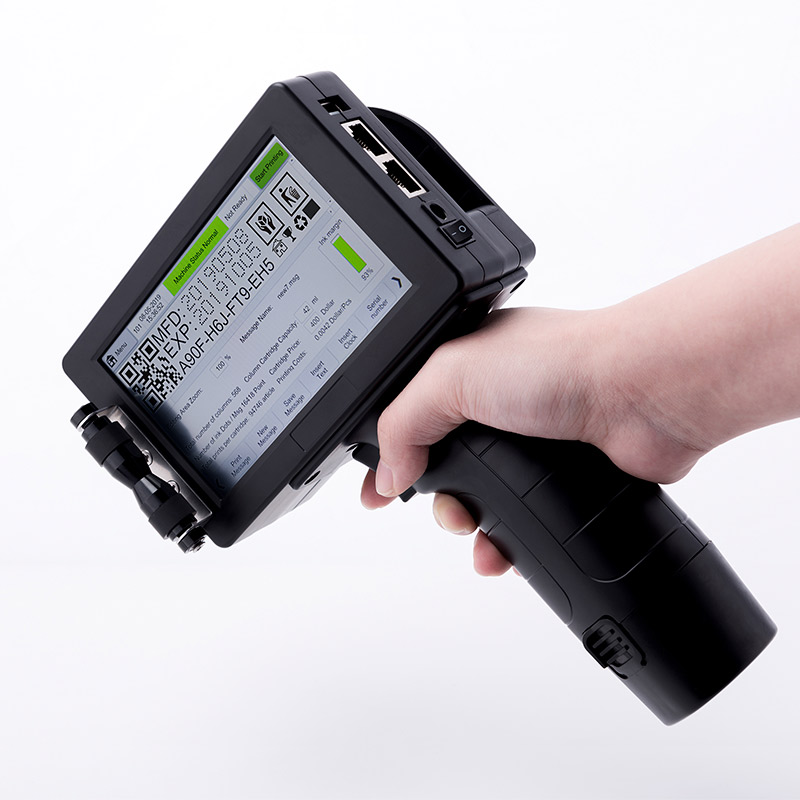
What is a TIJ coder?
A thermal inkjet (TIJ) coder prints with a disposable cartridge that contains both the ink and the print head. A tiny heater in each nozzle forms a vapour bubble that pushes out a drop of ink. When the cartridge is empty you replace it, and you get a new print head at the same time.
Our TIJ coders print at up to 600DPI, with 12.7mm or 25.4mm print height per head, and multi-head models reach 50.8mm or more. They work at a short print distance, typically 1 to 5mm from the product surface.
What is a CIJ printer?
A continuous inkjet (CIJ) printer pumps ink from a reservoir through a nozzle as a continuous stream of drops. Selected drops are charged and deflected onto the product, and unused drops return to the ink system. Because the drops fly a longer path, CIJ can print from a larger distance and onto curved surfaces.
CIJ uses two fluids: the ink and a make-up solvent. As solvent evaporates, the printer adds make-up to keep the ink viscosity stable. For example, our MFS2000 prints 1 to 5 lines with 2 to 20mm character height at a print distance of 3 to 30mm and speeds up to 576m/min.
TIJ vs CIJ: comparison table
| Factor | TIJ (thermal inkjet) | CIJ (continuous inkjet) |
|---|---|---|
| How it prints | Drop on demand from a disposable cartridge with built-in head | Continuous drop stream, charged and deflected |
| Print quality | High resolution, up to 600DPI; sharp text, barcodes and QR codes | Dot-matrix characters; clear, robust codes |
| Print height | 12.7mm or 25.4mm per head; more with multi-head models | Small characters, for example 2 to 20mm (MFS2000) |
| Print distance | Short, typically 1 to 5mm | Larger, for example 3 to 30mm (MFS2000) |
| Line speed | Up to 406m/min at low resolution; slower at high resolution | High; MF-M2000 up to 528m/min, MFS2000 up to 576m/min |
| Surfaces | Porous (cartons, paper, wood) with water-based ink; many non-porous surfaces with solvent cartridges | Plastics, glass, metal, cables and pipes, curved and non-porous surfaces |
| Consumables | Cartridges only | Ink and make-up solvent, plus filters as part of maintenance |
| Maintenance | Very simple: swap the cartridge | Regular routine; automatic nozzle cleaning on many models |
| Typical uses | Cartons, labels, pouches, pharma and food boxes, handheld coding | Beverage bottles, cans, cables, pipes, egg and food packaging lines |
When to choose a TIJ coder
A TIJ coder is the right choice when code quality and simplicity matter most. It suits cartons, labels, flat pouches and boxes, where the product passes close to the head. Typical codes are expiry dates, batch numbers, logos, barcodes and QR codes.
For mobile or low-volume work, a handheld coder such as the MF-G100 handheld inkjet machine prints 1 to 12.7mm high at 150, 300 or 600DPI. For production lines, online coders such as the MFTX1 high speed TIJ inkjet printer mount on the conveyor. On non-porous materials, use a TIJ black solvent quick-drying ink cartridge.
When to choose a CIJ printer
A CIJ printer is the better fit when the line is fast, the surface is curved or non-porous, or the distance between head and product varies. Examples are beverage bottles and caps, metal cans, cables and pipes that move continuously.
Our MF-M2000 high stable CIJ inkjet printer prints 1 to 4 lines at up to 528m/min with IP65 protection, and the MFS2000 CIJ inkjet printer prints 1 to 5 lines at up to 576m/min. Matching CIJ inks, such as IR-236BK ink for Domino A-series printers, are available for many printer brands.
TIJ vs CIJ: how to choose in 6 steps
- Define the code. List the content: date, batch, time, logo, barcode or QR code. High-resolution graphics point to TIJ.
- Identify the material. Porous cartons and paper suit TIJ with water-based ink. Plastics, glass and metal suit CIJ or TIJ solvent cartridges; curved or rough surfaces usually suit CIJ.
- Measure the print distance. If the product is always 1 to 5mm from the head, TIJ works well. If the gap is larger or varies, choose CIJ.
- Check line speed. Note the maximum speed and the resolution you need. Very fast lines are often better served by CIJ.
- Consider operation. TIJ needs almost no training: change the cartridge. CIJ needs a regular routine with ink and make-up, but runs continuously on high-volume lines.
- Test with samples. Send product photos or samples to our team and we can recommend a model and print test codes where possible.
Can I use both technologies?
Yes. Many factories use CIJ on the primary line for bottles or cans and TIJ on secondary packaging for cartons and cases. This lets each technology do what it does best.
For more detail, see our specialised sites: tijinkjet.com for TIJ cartridges and coders, and cijinkjet.com for CIJ printers and inks.
About Shenzhen Mufeng Technology Limited Company
Shenzhen Mufeng Technology Limited Company was founded in Shenzhen in July 2012. We have more than 120 technicians and a plant of over 10,000 square metres, and we export TIJ and CIJ coding equipment and consumables to customers in 100 countries, with one year of after-sales service.
FAQ: TIJ vs CIJ coders
What is the main difference between TIJ and CIJ?
TIJ prints from a disposable cartridge with a built-in head at a short distance and high resolution. CIJ uses a continuous stream of ink drops from a reservoir, prints from a larger distance and is suited to fast lines and curved or non-porous surfaces.
Is TIJ or CIJ better for cartons?
TIJ is usually the better choice for cartons and flat packs, because it prints sharp, high-resolution text, barcodes and QR codes and maintenance is a simple cartridge change.
Is TIJ or CIJ better for bottles and cans?
CIJ is usually preferred for bottles, caps and cans on fast lines, because it prints on curved and non-porous surfaces from a larger distance. TIJ solvent cartridges can also work on some flat non-porous surfaces.
Does a CIJ printer need make-up solvent?
Yes. A CIJ printer uses ink plus a matching make-up solvent that keeps the ink viscosity stable. A TIJ coder uses cartridges only.
How do I get a recommendation?
Contact Shenzhen Mufeng Technology Limited Company on WhatsApp +86 158 1405 1051 with your product, material, code content and line speed.
Need help choosing? Send your product, material and line speed on WhatsApp +86 158 1405 1051 and our team will recommend a TIJ or CIJ solution.
Relevant News

Contact Us
16th floor Building AB South Securities Building, Luohu District Shenzhen


